About Hypopressives
What are Hypopressives?
Hypopressive Exercise is a gentle whole body technique that combines rhythmical breathing, postural holds & relaxation
that helps women build a strong, lifted, calm core—supporting pelvic health, posture, breathing, confidence, and nervous system regulation without strain or pressure.
Despite being a relatively recent introduction to the UK, Hypopressives have been used in various parts of European since the 1980’s, being achievable for people of any age, size, shape or ability.
Key Physical Benefits of Hypopressives
1. Pelvic Floor Health (Without Overloading)
• Reflexively lifts and tones the pelvic floor
• Reduces symptoms of:
• Urinary incontinence
• Pelvic organ prolapse
• Pelvic heaviness or dragging
• Supports recovery after childbirth and during menopause
• Improves coordination between breath, diaphragm, and pelvic floor
Key difference: Strength without downward pressure (unlike crunches or intense core work).
⸻
2. Pain Reduction
• Reduces:
• Lower back pain
• Pelvic pain
• Neck and shoulder tension
• Helps break cycles of bracing and holding
⸻
3. Deep Core Strength & Stability
• Activates the transverse abdominis (deep core corset)
• Improves spinal stability and load transfer
• Reduces back pain and pelvic pain
• Supports safe return to exercise and sport
⸻
4. Posture, Alignment & Body Mechanics
• Improves posture through:
• Rib cage expansion
• Spinal decompression
• Reduced forward-head and rounded-shoulder posture
• Enhances balance, coordination, and proprioception
• Reduces strain on joints and connective tissue
⸻
5. Menopause-Specific Support
• Helps counter hormonal changes affecting:
• Muscle tone
• Connective tissue
• Intra-abdominal pressure
• Supports core integrity as oestrogen declines
• Reduces pressure-related symptoms common in menopause
⸻
6. Breathing & Circulatory Health
• Improves diaphragm mobility and breathing efficiency
• Enhances oxygenation
• Stimulates venous and lymphatic return
• Can support digestion and reduce bloating
Mental & Nervous System Benefits
1. Nervous System Regulation
• Activates the parasympathetic (calming) nervous system
• Reduces chronic stress and tension patterns
• Helps regulate cortisol levels
• Creates a sense of internal safety and calm
⸻
2. Reduced Anxiety & Mental Overload
• Breath holds and slow transitions promote mental clarity
• Improves emotional regulation
• Reduces anxiety linked to body symptoms (e.g. fear of leaking, prolapse anxiety)
• Helps women feel in control of their bodies again
⸻
3. Improved Body Awareness & Confidence
• Builds interoception (awareness of internal sensations)
• Reconnects women to their core in a non-threatening way
• Restores trust in movement after injury, childbirth, or symptoms
• Improves confidence in daily life, exercise, and intimacy
Lifestyle Benefits
1. Sexual Health & Intimacy
• Improves pelvic floor responsiveness and circulation
• Enhances sensation and comfort
• Supports confidence and relaxation around intimacy
⸻
2. Long-Term Resilience & Injury Prevention
• Creates sustainable strength rather than short-term intensity
• Supports ageing well and long-term pelvic health
• Complements running, lifting, yoga, Pilates, and sport
How Hypopressives Work
Hypopressives use a combination of:
• Specific postures
• Slow breathing
• Gentle breath holds (apnoea)
• Ribcage expansion
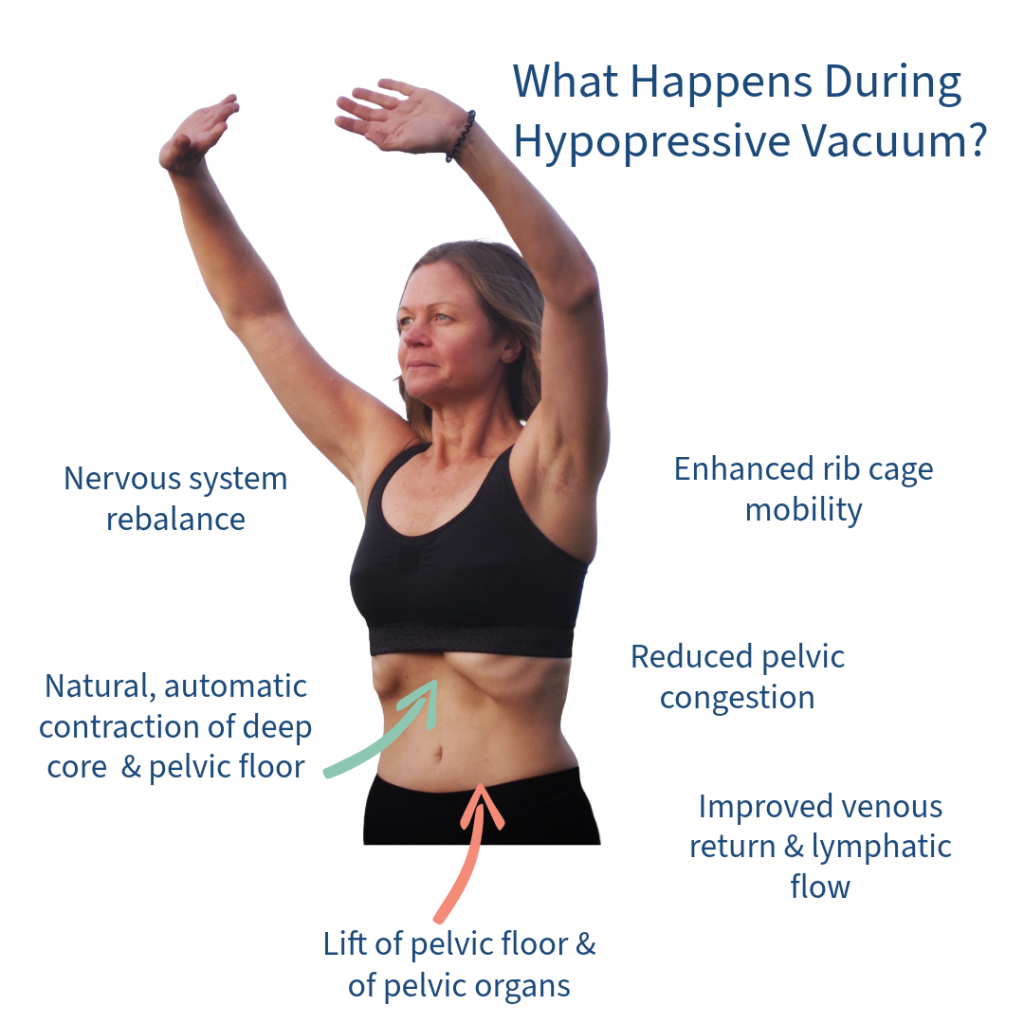
This creates a natural lift inside the body, reducing pressure in the abdomen and allowing the pelvic floor and organs to respond reflexively.
There is:
• No impact
• No straining
• No forced squeezing
Instead, the body learns to lift, support, and stabilise automatically.
This makes hypopressives ideal for women with:
• Prolapse
• Incontinence
• Overactive pelvic floor
• Pain
• Menopausal changes
• Or anyone who feels disconnected from their core.
How Hypopressives Are Different
Most exercise focuses on:
• Pushing harder
• Holding tighter
• Doing more
Hypopressives focus on:
• Decompression instead of pressure
• Reflex activation instead of force
• Support instead of strain
• Calm instead of stress
They strengthen the body without overwhelming it.
Are Hypopressives Right for You?
Hypopressives may be especially helpful if you:
• Are in perimenopause or menopause
• Have had babies and never fully felt “right” again
• Experience leaks, heaviness or prolapse
• Feel anxious, tense, or disconnected from your body
• Want strength without high-impact exercise
• Want to age well, not just cope
A Gentle, Powerful Way Back to Yourself
At Hypopressives North Wales, this work is about more than muscles.
It’s about:
• Feeling safe in your body
• Trusting your strength again
• Letting go of tension
• And rebuilding support from the inside out
Strong. Supported. Calm. Connected.
That’s what hypopressives offer.
Hypopressives v's Kegels?
Hypopressives are increasingly recognised as a reliable method for achieving these outcomes, supported by growing research evidence. Traditional exercises (kegels) are performed incorrectly by around 75% of us and fail to address the entire system, potentially leading to more problems .
Hypopressives Exercise stands out;
- automatically engages 70-80% of our core and pelvic floor muscles.
- works even if you struggle to locate your pelvic floor.
- involves complete movements of action and relaxation.
- is gentle and reduces risk of overload.
- reprograms the entire core, integrating myofascial chains, respiratory, and nervous systems.
Can everyone do Hypopressives?
Hypopressives exercise is not vigorous and you do not require any previous level of fitness or exercise experience to enjoy it, however one element, the Hypopressive apnoea (breath-hold with vacuum) should not be practised by individuals who are pregnant, or those dealing with;
- active cancer
- acute inflammatory gut disorders like Crohn’s Disease
- cardiac/respiratory disease
- recent abdominal surgery
- severe dizziness/fainting
- uncontrolled blood pressure
- untreated glaucoma
While this specific element may not be appropriate for individuals with the conditions listed above, it does not prevent you from safely enjoying and benefiting from the other components of the exercise.